
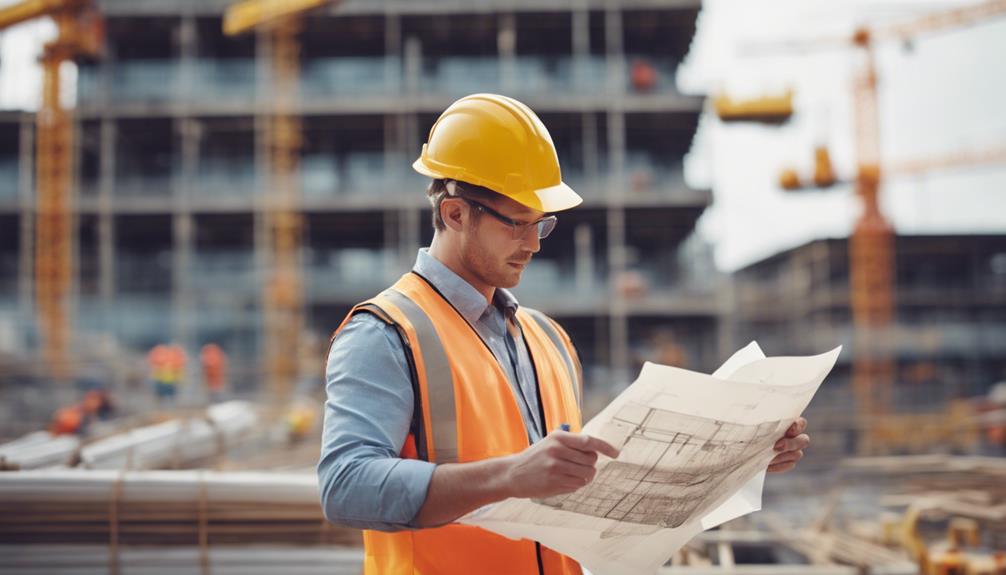
You might think builders and engineers are cut from the same cloth, considering their indispensable roles in construction. However, while they do collaborate, their paths diverge significantly in education and responsibilities. A builder's hands-on experience in managing construction sites contrasts sharply with an engineer's design and problem-solving role, grounded in extensive theoretical knowledge. This raises a compelling question: despite their differences, could the practical skills of a builder overlap with the technical prowess of an engineer? Let's explore how these professions intersect and the potential implications of this for the construction industry.
Defining Builders and Engineers
While both builders and engineers play pivotal roles in the creation of structures, their responsibilities and expertise differ significantly. You'll find that builders primarily focus on the physical construction of buildings. They're the hands-on workforce who transform blueprints into physical reality. Builders manage on-site construction, handle materials, and supervise the practical aspects of erecting buildings. Their day-to-day duties involve heavy labor, adherence to safety protocols, and coordination of construction activities.
In contrast, engineers are deeply involved in the planning and design phase of building projects. They use their expertise in mathematics and science to solve problems related to structure, efficiency, and safety. Engineers ensure that a building will stand the test of time and meet all regulatory requirements before the first stone is laid.
They create the blueprints that builders follow, making crucial decisions on materials, systems, and structural integrity.
You're observing two sides of the same coin – builders execute plans and engineers draft them. Both roles are essential, yet they require different skills and focus. Remember, next time you walk into any building, that a blend of practical execution and scientific innovation made it possible.
Educational Paths Compared
Now let's compare their educational paths to understand how builders and engineers prepare for their distinct roles. If you're eyeing a career as a builder, you'll likely start with a high school diploma or GED, followed by technical training or an apprenticeship. This practical path focuses on hands-on skills in construction and building techniques. You won't spend much time in traditional classrooms; instead, you'll be on-site, learning directly from experienced professionals.
On the other hand, if you're aiming to become an engineer, you're looking at a more academic route. You'll need a bachelor's degree in engineering, which is typically a four-year program. This education isn't just about gaining practical skills but also involves deep theoretical knowledge in areas like mathematics, science, and technology. Your time will be split between lectures, labs, and sometimes internships that provide a taste of real-world applications.
These paths reflect the core focus of each profession: builders emphasize practical, construction-based skills, while engineers dive into theoretical analysis and design. Each educational route equips you with the specific tools and knowledge needed for your chosen field, ensuring you're well-prepared to tackle the challenges unique to your profession.
Skill Sets and Responsibilities
Transitioning from educational paths to practical applications, let's explore the specific skill sets and responsibilities of builders and engineers. You'll find that builders often focus on hands-on execution. They need a robust understanding of construction techniques, materials, and safety protocols. It's their job to interpret blueprints and carry out the plan with precision. Their day-to-day responsibilities include overseeing construction sites, managing crews, and ensuring all building codes are met.
On the other hand, engineers think a step ahead. They design, innovate, and solve complex problems. If you're an engineer, you're not just creating plans; you're also anticipating potential issues in the design or implementation phases. Engineers must have a deep knowledge of mathematics, science, and technology, which they use to develop feasible solutions that meet structural, budgetary, and compliance requirements.
While both roles require critical thinking and problem-solving skills, their core functions differ significantly. Builders put plans into action, while engineers create those plans with future foresight. Understanding these distinctions clarifies why one might lean towards one profession over another, depending on personal interests and capabilities.
Whether you're more inclined towards practical implementation or theoretical planning defines your path in these interconnected, yet distinct fields.
Collaboration on Construction Projects
In the realm of construction projects, effective collaboration between builders and engineers is crucial for success. You'll find that the seamless interaction between these roles determines the efficiency and safety of building. As a builder, your hands-on experience complements the theoretical insights of engineers. Together, you're a formidable team tackling the intricacies of construction.
You must understand each other's strengths and weaknesses. While engineers provide detailed plans and calculations, you bring practical knowledge and skills to the table. This synergy is essential, especially when unexpected challenges arise.
You're often the first to spot potential issues on site, and your feedback can lead to crucial adjustments in the design, ensuring that the final outcome is both practical and robust.
Effective communication is the backbone of your partnership. Regular meetings, clear reports, and open channels of dialogue help keep both parties aligned with the project's goals and progress.
Technology also plays a significant role in this dynamic. Using project management software and other digital tools, you can share updates, track changes, and maintain documentation efficiently.
Case Studies and Examples
Examining specific case studies highlights how crucial collaboration between builders and engineers truly is. Take the construction of the Millau Viaduct in France, for instance. You might know it as the tallest bridge in the world, a title it wouldn't hold without the seamless integration of engineering innovations and skilled construction. Engineers designed the bridge to maximize aerodynamics and durability, while builders executed these complex plans, often adapting techniques on-site to ensure structural integrity and safety.
Another example is the Burj Khalifa in Dubai, the tallest skyscraper on the planet. Here, engineers and builders had to work hand-in-hand to tackle the challenges posed by such extreme heights. Engineers developed a new structural system, the "buttressed core," which supports the colossal height, while builders meticulously followed these plans, employing precision in every poured concrete segment and steel girder.
In both cases, you see that without builders' practical insights and adaptability, the engineers' designs might remain just that—designs.
Conversely, without the engineers' foresight and technical expertise, builders wouldn't have the blueprint for executing such groundbreaking projects. This synergy not only makes these awe-inspiring structures possible but also pushes the boundaries of what can be achieved in construction and engineering.
Legal and Safety Considerations
Often, builders and engineers must navigate a complex web of legal and safety regulations to ensure their projects align with industry standards and protect public welfare. As you step into this role, you're not just handling tools and materials; you're also managing critical legal responsibilities. You need to be well-versed in local building codes, environmental regulations, and labor laws. Each of these can significantly impact how you plan and execute your projects.
Adhering to safety standards isn't just about compliance—it's about safeguarding your team and the public. You must ensure that all safety protocols are followed meticulously. This means conducting regular site inspections, providing adequate training for your workers, and staying updated with the latest safety innovations in building technology.
Conclusion
You've seen that builders and engineers have distinct roles in construction, each with different educational paths and skill sets. While builders handle the hands-on construction, engineers focus on design and problem-solving. They must collaborate to ensure projects succeed. Through real-world examples, it's clear that both professions uphold crucial safety and legal standards, contributing uniquely to the building process. Remember, while builders aren't typically engineers, their combined efforts are essential for any construction project's success.
Related articles: How to Find the Best Home Builders and Remodelers Near Me? · What Is the Difference Between a Builder and a Remodeler? · How Can I Verify If a Builder Is Licensed?