
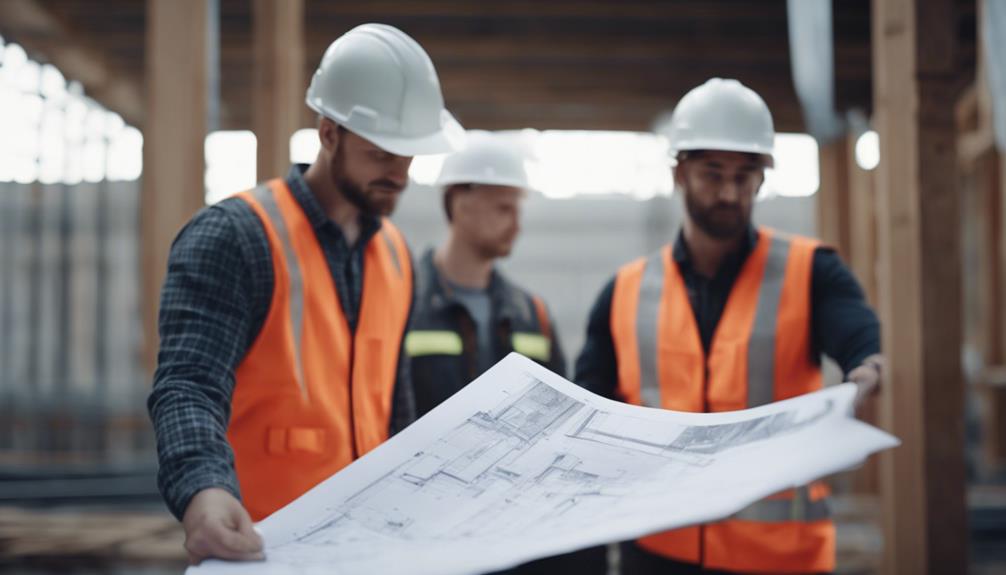
When you're considering hiring a builder, you might focus on their practical skills, but have you ever stopped to ponder the formal qualifications that set the best apart from the rest? Beyond the basics of a high school diploma and perhaps a stint at a trade school, there's a world of certifications and licenses that could be influencing the quality and safety of your construction project. Builders with specialized training in areas like LEED certification or advanced degrees in construction management bring a deeper level of expertise and foresight to a project. So, what exactly should you look for to ensure you're getting the best? Let's explore the must-have credentials that can impact the success of your building endeavors.
Educational Background Requirements
To enter the field of construction, a high school diploma or equivalent is typically the baseline educational requirement for a builder. This foundational education provides you with essential skills in mathematics, science, and communication, all of which are crucial in construction. However, pursuing further education can significantly enhance your prospects and expertise.
You might consider enrolling in a trade school or a community college that offers courses in construction technology, carpentry, project management, or related fields. These programs not only deepen your technical knowledge but also equip you with practical skills through hands-on training. They'll introduce you to the latest building technologies and methodologies, preparing you for the complexities of modern construction projects.
Additionally, some builders opt for a bachelor's degree in construction management or civil engineering. This higher education level broadens your understanding of building science, project management, and cost estimation, giving you a competitive edge in the job market. It's not just about being able to build; it's about managing projects efficiently, adhering to budgets, and ensuring safety standards.
Necessary Certifications and Licenses
Beyond your educational background, obtaining specific certifications and licenses is crucial for your career as a builder. These credentials not only enhance your credibility but also comply with legal standards, ensuring you're qualified to handle construction projects safely and effectively.
Firstly, you'll need a general contractor's license. This is mandatory in most regions and proves that you've met the minimum criteria to oversee construction activities. The licensing process typically involves passing an exam that covers building codes, construction standards, and sometimes, business management.
Additionally, consider specialty certifications that align with your intended area of focus. For example, if you're interested in green building, earning a certification from a recognized body like the Leadership in Energy and Environmental Design (LEED) can set you apart. These certifications demonstrate your expertise in specific niches and can be tremendously beneficial in attracting new clients who are interested in those areas.
Lastly, keep in mind that your licenses and certifications might need to be renewed periodically. Staying updated with the latest construction codes and technology through continuing education courses is vital. Not only does this keep your knowledge fresh, but it also shows potential clients that you're committed to maintaining high standards in your profession.
Experience in the Construction Industry
In addition to obtaining the necessary certifications and licenses, gaining hands-on experience in the construction industry is essential for your success as a builder. You'll find that the practical skills you develop on-site can't be replicated through theoretical learning alone. This experience allows you to understand construction processes deeply, manage real-world challenges, and refine your technical expertise.
Starting as an apprentice or a laborer can be an invaluable step. You'll learn from seasoned professionals about the nuances of building, from foundational work to the finishing touches. Each project adds to your portfolio and depth of knowledge, making you more versatile and adaptable.
Additionally, working in various construction roles exposes you to different facets of the industry. Whether it's residential or commercial, each sector has unique requirements and challenges. Understanding these distinctions enhances your ability to lead projects effectively and meet client expectations.
Essential Soft Skills for Builders
Several soft skills are crucial for builders to effectively communicate and lead their teams. You need to have excellent communication skills. This means you're not just good at giving clear instructions, but you're also an active listener. Understanding your team's concerns and feedback makes you a better leader and problem solver.
You'll also find that strong interpersonal skills are indispensable. These skills help you build trust and respect with your workers, subcontractors, and clients. They foster a positive work environment and can lead to better job satisfaction and retention among your crew.
Leadership is another key soft skill. As a builder, you're often seen as the team captain. You need to inspire and motivate your team, especially when deadlines are tight and the pressure is on. Being decisive and maintaining a calm demeanor helps keep the project moving smoothly without panic.
Finally, adaptability and problem-solving are critical. Construction projects rarely go exactly to plan. You've got to be able to think on your feet and come up with solutions quickly. Flexibility lets you handle unexpected challenges without missing a beat.
These soft skills complement your technical knowledge and are just as important in ensuring the success of your projects.
Understanding Legal and Safety Regulations
While mastering soft skills is crucial, you must also grasp the complex web of legal and safety regulations that govern construction. It's essential you understand these laws to ensure not only the safety of your team but also to comply with local, state, and federal standards. Ignoring or misunderstanding these rules can lead to severe penalties, including fines or a halt in your project.
You'll need to familiarize yourself with the Occupational Safety and Health Administration (OSHA) guidelines, which outline safety measures to prevent workplace injuries and illnesses. Additionally, staying updated on building codes is crucial; these codes specify the minimum standards for the safety, health, and general welfare of both construction workers and residents.
Moreover, environmental regulations play a significant role. You must know how to manage construction waste, handle hazardous materials, and protect local wildlife.
Each state might've specific laws affecting construction practices, so it's wise to consult with legal experts in your area.
Conclusion
As a builder, you should have at least a high school diploma, but further education in fields like construction management can deepen your expertise. It's crucial to obtain a general contractor's license and certifications like LEED. You'll need hands-on experience in various construction roles and strong soft skills to manage projects effectively. Additionally, make sure you're up to date with legal and safety regulations to ensure your projects are both safe and compliant.
Related articles: Can Builders Also Offer Design Services? · What Are the Common Challenges Faced by Builders and Remodelers? · How to Ensure Quality When Working With Builders and Remodelers?